
The aim of preventive care is to take preventive actions in terms of staying healthy by reducing the chances of falling ill even before the symptoms occur. The process involves regular check-ups, screenings, staying healthy by taking preventive actions in relation to lifestyles, and other forms of early interventions that keep a person healthy by staying ahead of any health-related concerns long before they become a challenge to manage.
Many physical and mental concerns that affect wellness can be prevented when taking early measures. Preventive care is one of the most crucial undertakings when considering keeping wellness in proper balance by promoting early detection and risks for general wellness, as well as maintaining a good balance between physical and mental wellness.
This blog will try to explore why preventive care is important, the importance of preventive health care, benefits of preventive care and how to protect your health through early action.
What Is Preventive Care?
Preventive health care refers to health care services provided for the purpose of preventing health issues or detecting health issues prior to their escalation. In other words, preventive health care refers to health care provided prior to health concerns arising. One of the major benefits of preventive care is preventing health complications.
Why Preventive Care Matters
Preventative care helps you identify health problems before complications occur. Early diagnosis provides a better opportunity to receive appropriate treatment, leading to more effective outcomes with fewer complications especially for individuals relying on comprehensive Disease Management Services in Texas for ongoing care and support. The following points explain why preventive care matters:
- Support in lowering the possibility of acquiring chronic illnesses.
- Handle lifestyle problems and issues such as nutrition, hypertension, and physical inactivity.
- Have and maintain higher levels of energy and mobility.
- Promote healthier lifestyle practices.
- Improve the quality of life and functional status.
- Decrease enduring healthcare costs by preventing serious illness.
- Curtail expensive hospital visits and treatments.
- Alleviate stress and anxiety by providing reassurance about health.
Key Benefits of Preventive Care
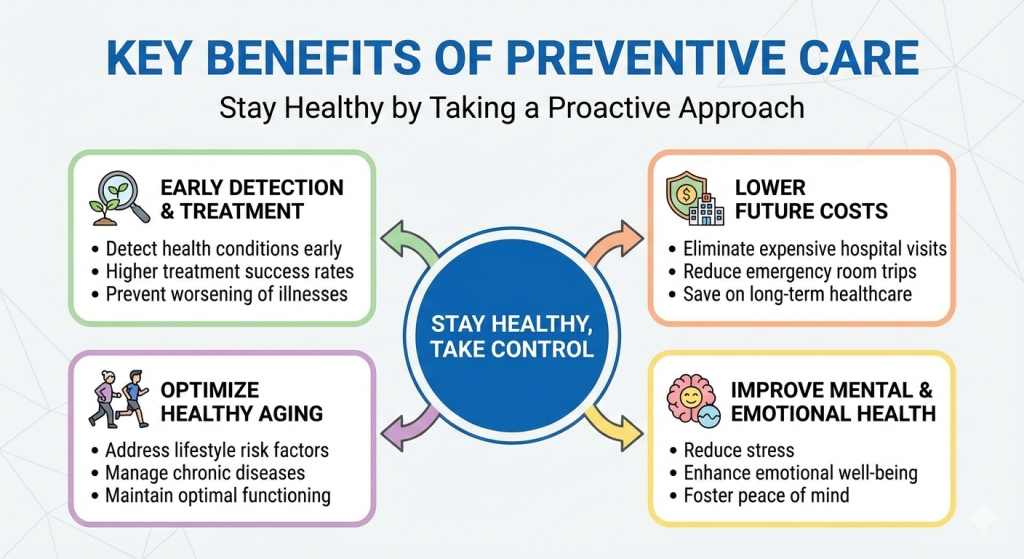
Preventive care plays a vital role in maintaining overall health by identifying potential issues before they develop into serious conditions. By taking a proactive approach, individuals can better manage their well-being and make informed decisions about their health. Preventive care allows for the early detection of medical conditions, enabling timely treatment with higher success rates and reducing the risk of complications caused by untreated illnesses.
This approach also helps lower long-term healthcare costs by minimizing avoidable hospital visits and emergency care. In addition, preventive care supports the management of lifestyle factors and chronic conditions, which is especially important for those seeking reliable chronic illness services in texas. Beyond physical health, preventive care contributes to improved mental and emotional well-being by reducing stress and promoting a greater sense of control over one’s health.
Preventive Mental Health Care
Preventative mental health care is an action taken to ensure the emotional and psychological health of an individual is protected before things get out of control. It is a significant part of holistic preventive care that allows an individual to handle stress, become resilient, and attain a good work-life balance.
Benefits of preventive health care or benefits of preventive care are involving but not limited to stress management measures that may alleviate daily stress, early support, guidance and counseling as well as mindfulness practices and coping mechanisms to increase emotional stability.
The importance of preventive health care or mental health prevention in one’s lifestyle is a way of making a contribution to a healthier and more balanced lifestyle, which is very essential to one’s mental and physical health. This not only emphasizes the importance of mental health but also the effectiveness of preventive health.
Common Types of Preventive Care
Preventive care is connected with various services and programs that should help to maintain health and avoid potential issues on the initial stage. These are physical and mental services because they provide a person with a sense of focus on his well-being overall.
Physical Health Screenings
Consistent screenings of physical health aid in the detection of medical problems before they become critical so that they can be addressed in time. Such screenings may cover blood monitoring and cholesterol monitoring, cancer screening like mammogram, colonoscopy, diabetes and glucose monitoring, vaccinations, and periodic eye and hearing screening.
Mental Health Check-Ins
Preventive mental health check-in is directed at the early diagnosis and treatment to ensure that the emotional or psychological challenges do not intensify. The examples of services may be regular counseling sessions, stress and anxiety tests, mood tracking, monitoring the cognitive behavioral therapy, or help with issues of depression or burnout symptoms.
Wellness and Lifestyle Coaching
Wellness and lifestyle coaching helps people get healthier lifestyles that would be beneficial in long-term preventive health. The benefits of preventive care include this type are nutrition education, physical activity interventions, sleep hygiene interventions, weight management education, and smoking cessation or other lifestyle intervention support.
Preventive Programs at Community and Workplace
Prevention programs at community and workplace level encourage preventive health practices at a large scale. It can be examples of employee wellness programs, health education seminars, community fitness, peer support groups, and community health screenings or vaccination campaigns, as well as making preventive care more accessible and inclusive.
Breaking Down Barriers to Preventive Care
Although preventive care has many positive effects, a high number of individuals are not able to access these services because there are numerous barriers to prescribing prophylactic care. It is important to understand these obstacles and overcome them to make sure that all people are able to enjoy the advantages of preventive care to both the physical and mental state.
Time Constraints
The hectic schedules usually create a challenge in making time to check up and do regular screenings. Seeking little openings to schedule appointments or even make it a habit of practicing preventive care can assist one to remain proactive in relation to health.
Cost Concerns
Limitations in finances may deter individuals from obtaining preventives as in most instances early intervention will decrease health care expenses in the long run. Preventive care can be made more accessible through affordable options of healthcare, insurance coverage, and community programs.
Fear or Lack of Awareness
Others do not take up preventive care because they have a fear of tests or results and also fear the health system. Anxiety can be lowered by increasing information on the purpose and advantages of preventive health care and making people participate.
Improving Participation by Education and Access
Equipping people with knowledge on preventive care and increasing the accessibility of services are some of the ways that can enable people to act. Education, workplace initiatives, and community outreach can overcome lapses and make sure that more individuals enjoy the total advantages of preventive care.
How to Take Action Toward Preventive Care
Preventive care is the action you take to be healthy: Get screened, make healthy lifestyle choices, stay in control of your health and enjoy life. These every day practices include regular medical, dental and eye examinations to catch health problems early, keeping up with vaccinations and tracking meaningful health data points including blood pressure, glucose and cholesterol.
Diet, exercise, not smoking and drinking in moderation all reduce disease risk. Just as important is placing a high priority on mental health by seeking counseling, participating in stress management tools such as mindfulness or meditation, as they help to build emotional resilience and wellness.
How Beulah Family Clinic Supports Preventive Care
Timely remedial action is the key to good health status, both mentally and physically. Health is good health reduces the risks and guarantees quality life. Conducting regular check-ups, screenings, and seeking mental health assistance are some of the ways through which an individual can manage his or her health, and he or she can enjoy the benefits of preventive care. We hold the beliefs in adopting the values of preventive care by having thorough health screening, lifestyle guidance, and mental health services according to the specific needs of the patient. Our mission at Beulah Family Clinic is to provide support to the family by ensuring that they are ahead of the disease and thus, they are able to identify the disease early and they are given the assurance of a healthy life. Prevention does not exist but is an investment in future health.
FAQs
What is preventive care?
Preventive care covers medical and wellness services designed for the early detection and prevention of health problems, as well as to manage diseases at an early stage before they cause serious complications.
Why is preventive care so important?
Preventive care is key as it lowers the risk of chronic diseases, restores health status, and assists in promoting mental and physical well-being.
What are some examples of preventive services?
The preventive care includes such things as regular checkups, screenings and vaccines, counseling and mental health services.
How frequently do I need a preventive check-up?
How often you need to have them depends on your age, health and risk factor. All but the vast majority need at least yearly check ups.
How does preventive care benefit mental health?
Preventive mental health care helps manage stress, build resilience, and address emotional concerns before they escalate.