

A sinus infection is normally referred to as sinusitis. This is an infection that results from the fallouts of the blockage of the sinus membranes by mucus. Various people have been asking different questions regarding sinusitis. Some of the questions include “is a sinus infection viral or bacterial?” and “are sinus infections viral or bacterial?”
Therefore, it is crucial to know the difference between a viral sinus infection and a bacterial sinus infection. This blog intends to clear the misunderstanding regarding the symptoms of bacterial sinus infection, what is a viral sinus infection, whether you have fever with sinus infections, and other relevant information like virus vs. bacteria sinus infection and whether most sinus infections are viral or bacterial.
What Is a Sinus Infection
A bacterial infection is a form of infection that happens through the spread of bacteria. The spread of bacteria occurs through touch and the exchange of bodily fluids such as through coughing and sneezing, and through the air or environment. The infections will persist for at least 10 days and may actually get worse after the first week of the occurrence of the infection. People often wonder whether a sinus infection is viral or bacterial.
Blocked sinus passages are the source of mucus buildup which lead to congestion and discomfort. Knowing whether sinus infections are caused by viruses or bacteria can support the management of the infection. Acute sinus infections refer to infections that last for less than four weeks, whereas chronic sinus infections denote to infections that last more than twelve weeks. Knowing the viral and bacterial sinus infection symptoms can assist in the management of the infection. For more information on long-term health conditions, including the types, symptoms, and associated risks, you can explore related resources that can explain how chronic illnesses affect the body.
What Is a Viral Sinus Infection
A viral sinus infection is an infection of the sinuses that is caused by viruses, not bacteria, and is a result of a cold infection. People often ask, “Is a sinus infection viral or bacterial?” The answer is that the majority of sinus infections are viral infections.
Causes of Viral Sinus Infection
Viral sinus infections generally occur as a result of the spread of common cold viruses or other infections of the upper respiratory tract into the sinuses. The question on everyone’s mind is: is it a viral or a bacterial sinus infection? Viruses cause irritation of the nasal tissues, which leads to swelling and the buildup of mucus.
Viral vs Bacterial Sinus Infection Symptoms
Viral and bacterial sinus infection symptoms may include nasal congestion, clear or light-colored mucus, facial pressure, and mild headache. Some may have a low-grade fever. Symptoms usually improve within 7-10 days, which helps to differentiate between bacterial and viral sinus infection.
Treatment for Viral Sinus Infection
Symptom relief is the main treatment approach rather than antibiotics, which do not work on viral infections. The recommended treatment is bed rest, increased fluid intake, steam inhalation, saline nasal sprays, and OTC decongestants or pain relievers. The knowledge of viral vs. bacterial sinus infections treatment is beneficial in avoiding antibiotics and promoting the body’s natural cure.
What Is a Bacterial Sinus Infection
A bacterial sinus infection is the result of the multiplication of bacteria in the sinuses, which get clogged during a viral infection. The question on everyone’s mind is: is my sinus infection caused by bacteria or a virus?
Causes of Bacterial Sinus Infection
A bacterial sinus infection is usually a secondary infection resulting from a viral cold. When the swollen sinuses are still plugged, bacteria get stuck and start multiplying. The difference between the two infections is key in identifying which infections need medical care.
Signs of Bacterial Sinus Infection
The signs of a bacterial sinus infection are a prolonged duration of more than 10 days without improvement, severe facial pain, thick and colored mucus, and a temperature above 101°F, or 38.5°C. “Double worsening,” which is a sudden improvement of symptoms followed by a sudden worsening, is a strong sign of a bacterial infection.
Treatment for Bacterial Sinus Infection
The major difference in the treatment of bacterial and viral sinus infections is that in bacterial sinus infections, antibiotics may be necessary. Also, the doctor may prescribe nasal corticosteroids or other drugs to help reduce inflammation. Understanding when to seek medical care for symptoms or fever is important in helping to recover from sinus infections. Explore preventive healthcare services, including screenings, vaccinations, and tips to maintain overall wellness and health.
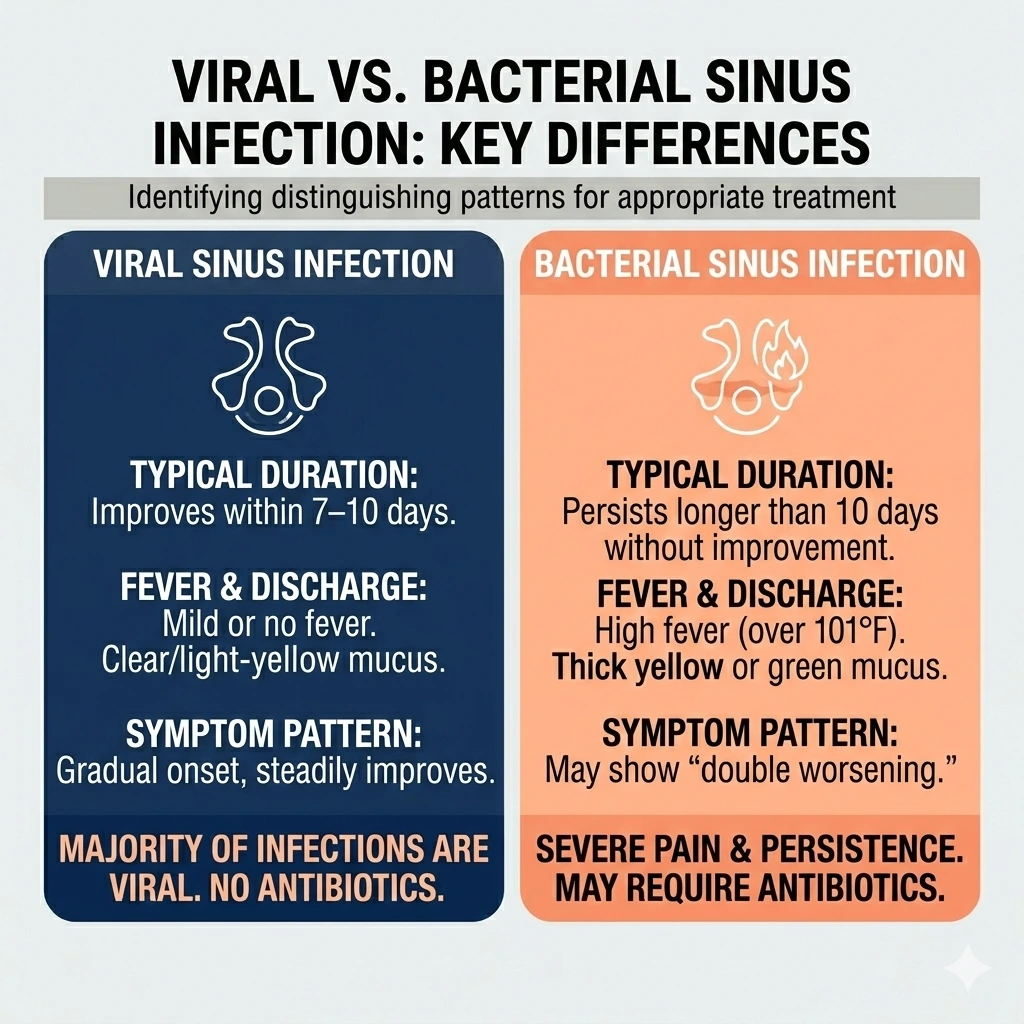
Viral vs. Bacterial Sinus Infection: Key Differences
Knowing the difference between a viral sinus infection and a bacterial sinus infection helps in the appropriate treatment of the condition, as well as in avoiding the use of antibiotics if they are not necessary. There are some patterns that help in establishing whether a sinus infection is viral or bacterial in nature.
| Feature | Viral Sinus Infection | Bacterial Sinus Infection |
| Typical Duration | Improves within 7–10 days | Persists longer than 10 days without improvement |
| Fever with Sinus Infection | Mild fever or none | Often high fever (over 101°F / 38.5°C) |
| Nasal Discharge | Clear or light-yellow mucus | Thick yellow or green mucus |
| Symptom Pattern | Gradual onset, steadily improves | May show “double worsening” after initial recovery |
| Facial Pain & Pressure | Mild to moderate discomfort | More severe, persistent pain |
| Antibiotics Needed? | Not effective against viruses | May be required if bacterial infection confirmed |
Identifying these viral versus bacterial sinus infection symptoms can help answer the common query of whether most sinus infections are viral or bacterial. In reality, the majority of sinus infections are indeed viral.
Do Sinus Infections Cause Fever
Fever is one of the sinus infection symptoms that may occur. The severity of fever also helps in differentiating viral from bacterial sinus infection symptoms. For example, a mild fever is associated with viral sinus infection, while a fever over 101°F (38.5°C) is associated with bacterial sinus infection. A fever that persists or rises rapidly is a red flag that helps in answering the question: “is my sinus infection viral or bacterial?”
How Doctors Diagnose Sinus Infections
In order to determine if a sinus infection is caused by a viral or a bacterial agent, doctors measure the duration of the symptoms and conduct a comprehensive physical examination, which includes checking for nasal congestion, facial pain, and mucus discharge. In addition, if the symptoms are severe, a CT scan or nasal culture is conducted to determine if the sinus infection is caused by a viral or a bacterial agent, which helps to determine viral vs. bacterial sinus infection symptoms.
When to See a doctor
It is important to know when to visit a doctor to avoid complications and determine if my sinus infection is caused by a virus or bacteria. Knowing this will effectively help manage the symptoms of a viral or bacterial sinus infection. Discover effective disease management strategies to control symptoms, prevent complications, and improve quality of life.
Symptoms Lasting More Than 10 Days
When the symptoms of sinus infection last for more than 10 days, it might suggest that the infection is caused by bacteria. A medical examination should be conducted to confirm the infection and begin the appropriate treatment.
Severe Facial Pain
Severe facial pain, especially on the cheeks, forehead, and around the eyes, is a symptom that warrants the attention of a medical expert, as it indicates the presence of bacteria.
High Fever
Bacterial sinus infection symptoms include a high fever, defined as anything above 101°F or 38.5°C. This symptom differentiates bacterial sinus infection from the symptoms of viral sinus infection.
Swelling Around Eyes
Swelling, redness, and tenderness around the eyes are signs that the infection is spreading, thereby requiring urgent medical attention to prevent the development of complications.
Recurring Infections
Recurring sinus infections can cause chronic sinusitis, emphasizing the importance of consulting a doctor to receive the appropriate medical attention.
Prevention Tips
By preventing sinus infections, the risk of experiencing viral vs. bacterial sinus infection symptoms can be reduced, and the sinuses can remain healthy throughout the year. Proactive steps can also help minimize the possibility of wondering whether the infection is viral or bacterial. Learn how chronic illness affects daily life, including symptoms, risks, and strategies for better management.
Hand Washing
Regular hand washing helps to eliminate germs associated with a cold or a viral sinus infection. This reduces the risk of acquiring a sinus infection.
Managing Allergies
Controlling allergies through medication and avoiding allergens helps prevent sinus infection. This reduces the risk of acquiring a sinus infection caused by either a virus or bacteria.
Use of Humidifiers
Using a humidifier helps to keep the nasal passages moist. This ensures that mucus drains properly without irritating the sinuses, which may lead to the symptoms of a viral vs. bacterial sinus infection.
Avoid Smoking
Smoking and exposure to secondhand smoke irritate the membranes of the sinuses. This increases the risk of acquiring a sinus infection.
Getting the Flu Vaccination
Getting an annual flu vaccination helps to prevent flu-related sinus infections. This reduces the risk of acquiring a sinus infection caused by a virus.
How Beulah Family Medical Clinic Help with Sinus Infection
The majority of sinus infections are caused by a virus and can be treated at home, but a bacterial sinus infection can be medically treated. Beulah Family Medical Clinic can contribute to this by providing a proper diagnosis to determine if the sinus infection is a viral infection or a bacterial infection, providing individualized treatment regimens, prescribing antibiotics, if need be, and providing guidance to patients on prevention to reduce future infections and complications.
FAQs
What is the difference between viral sinus infection and bacteria?
Whereas sinus infections that are caused by viral infections tend to follow a course that results in no complications after 7 to 10 days, the process of the spread of bacteria takes a lot longer, and a lot of thick yellow/green mucus, intense fever, and facial pains are experienced.
How do you tell if the sinusitis is viral or bacterial?
The duration and severity of the symptoms, along with the color of the mucus, need to be observed; the symptoms of a bacterial sinus infection will get worse and then improve, while those of a viral one will stabilize.
How do you know if the sinus infection is viral or bacterial?
Viral infections will show a gradual improvement, and the patterns of a bacterial sinus infection will be past one decade or double.
Do you need antibiotics for a sinus infection?
Antibiotics are also not required; they are only needed for a bacterial sinus infection and not for a viral one, which will cure with the help of rest and support.
Can a viral sinus infection turn into a bacterial one?
Yes, if the nasal passages are still congested after a viral sinus infection, then the bacteria will multiply and cause a second infection, which is bacterial and can be cured.